


Hospitality beds for sale, manufactured in Cape Town
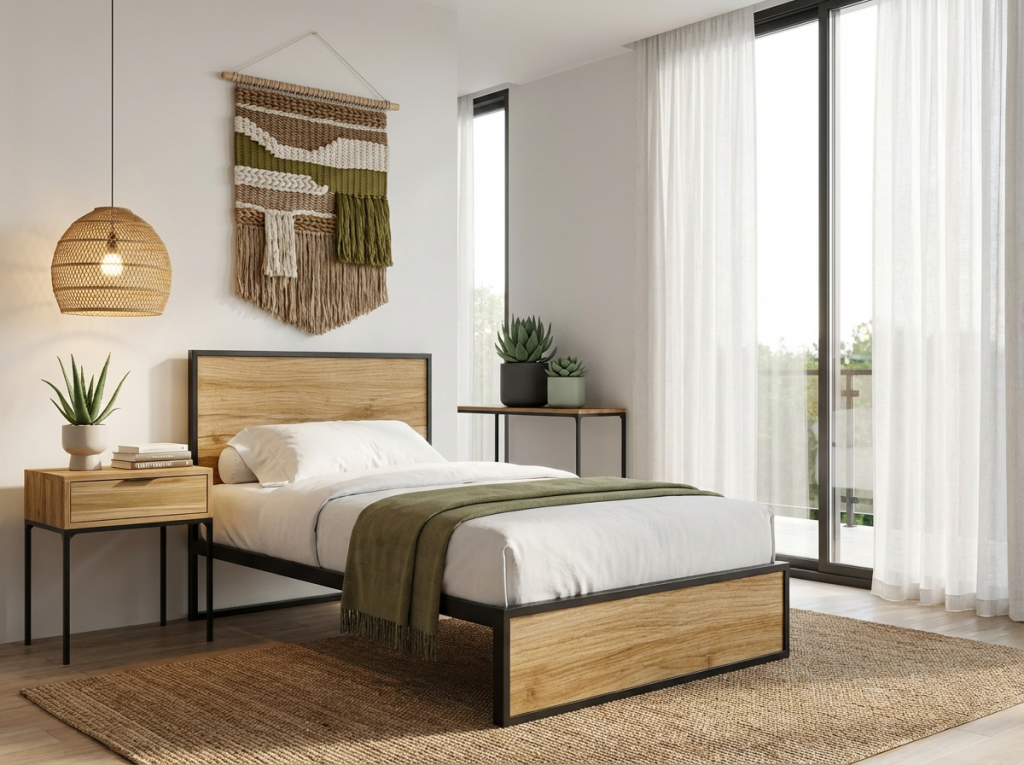
There’s a moment every hotel or lodge owner reaches, usually about eighteen months after opening, when the first bed frame starts to creak. Not fail exactly — just announce, quietly, that it wasn’t built for what a guest room actually asks of it. That moment is the entire argument for this article. A hospitality bed isn’t a domestic bed that happens to sit in a commercial space. It’s a different engineering problem, sold by very different kinds of suppliers, and the difference between them shows up in year three, not on the delivery day.
Choosing a bed supplier for hospitality properties is a different decision to furnishing a private home. A procurement manager or hospitality operator is weighing structural failure risk across hundreds of guest-nights a year, lead time against a fit-out programme, and the reputational cost of a supplier who can’t be reached once the invoice is paid. Solid wood hospitality beds are structural bed frames engineered to withstand that kind of continuous guest turnover — properly specified, they hold up for 15 to 25 years in a working hotel or lodge, against the 5 to 7 year lifespan typical of imported veneer or laminate frames. Eco Furniture Design manufactures beds for the hospitality industry by hand in our Cape Town workshop from FSC-certified oak, ash and South African blackwood, with nationwide delivery and phased scheduling built around real fit-out programmes rather than shipping container timetables.
We’ve been doing this for over 16 years, and if there’s one thing that’s stayed consistent across sixteen years of hotel, lodge and guesthouse orders, it’s this: the suppliers who get called back for phase two are the ones a specifier could actually walk into and watch work.
Written by the Eco Furniture Design design and manufacturing team, Cape Town , South Africa

Contents
- Why the sourcing decision matters more than the bed itself
- The hospitality bed buyer’s guide
- Timber palette for hospitality environments
- Style direction for hotels, lodges and guesthouses
- Room flow and bed size specification
- The trade specifier vault
- The anti-regret checklist for hospitality buyers
- Care and lifespan in a commercial setting
- Frequently asked questions
Beds for Hospitality Industry | Modern Sustainable Beds for sale & to order
Ideal for Hotels Lodges Residential & Hospitality Projects
Why the sourcing decision matters more than the bed itself
Most furniture briefs treat the supplier decision as a formality that happens after the design decision. For hospitality beds, that order is backwards. The supplier you choose determines whether a damaged frame gets matched exactly two years from now or replaced with something slightly wrong, whether a fit-out delay costs you three weeks or three months, and whether the finish sitting eighteen inches from a sleeping guest’s face is actually doing what the spec sheet claims.
Two things separate a genuinely sound bed supplier for hospitality properties from one that simply looks the part on a website: where the timber actually comes from, and where the bed is actually built.
On timber, “sustainable” has become a word suppliers reach for reflexively, which is exactly why it needs to be checked rather than taken on faith. There’s a real difference between a supplier who can name the specific forest certification behind every species on offer, and one who uses the word because it tests well. We source SA Pine from SAFCOL-certified plantations, South African blackwood from regulated local suppliers, and European oak and ash from FSC-certified mills — and we can put the paperwork behind every one of those claims in front of a procurement manager who asks. That distinction matters for two separate reasons: it’s an increasingly hard requirement from responsible tourism certification bodies and hotel groups with their own ESG commitments, and it’s a direct, physical reality for the guest sleeping in the room, since the finish sitting on that frame either off-gasses into a closed space for months or it doesn’t.
On location, the case for local manufacturing isn’t sentiment — it’s risk. A frame built in Cape Town can be inspected on the factory floor before an order is confirmed. A frame shipped from overseas cannot. A local manufacturer holds production records that let a damaged unit or a fifth-phase expansion be matched to the original specification years later. An overseas supplier, once the container has landed and the agent has moved on, typically can’t. And a local lead time is set against real production capacity — an overseas lead time is set against a shipping schedule that a single port delay or customs hold can quietly detonate against your opening date.
The hospitality bed buyer’s guide
Start with what makes a bed built for the hospitality industry structurally different from the one in your own bedroom, because the difference explains almost everything else in this guide.
The stress profile is entirely different. A domestic bed gets slept in and occasionally sat on. A hospitality bed absorbs guests perching on the edge to tie shoes, luggage dropped directly onto the base, and housekeeping stripping and remaking it hundreds of times a year — for years, without a single day’s rest between guests the way a domestic bed gets. That’s not a marginally harder use case; it’s a different design brief.
Engineered wood fails in a way that’s easy to predict and hard to notice until it’s too late. Frames built from MDF or particle board cores wrapped in veneer or laminate look identical to solid timber on delivery day. The failure shows up later — moisture from routine cleaning, humidity swings in a coastal property, and the sheer mechanical repetition of hospitality use cause the veneer to delaminate and the core to swell, usually well before the ten-year mark. Solid timber doesn’t carry that failure mode at all. The material is the same thing all the way through, and if the surface does wear, it can be sanded and refinished rather than thrown out.
Joinery is where the real engineering argument lives. Mortise and tenon or through-dowel joinery spreads load across the full face of the joint. Staple-and-glue construction — which is what most imported flat-pack hospitality frames actually use under the marketing copy — relies entirely on the adhesive bond, and that bond is the first thing to give once a frame is cycling through the moisture and movement of continuous guest use.
And then there’s the part that only shows up years into a contract: a fit-out is rarely a single order. Rooms get refreshed in phases. A damaged frame in room 214 needs to match the other nineteen in that wing. A new block gets added two years later and needs to match a specification nobody wrote down anywhere except in a manufacturer’s own production file. This is the argument for a manufacturer who keeps records, not just a supplier who quotes well — browse our full beds for sale collection to see the range this kind of continuity is actually built from.
Timber palette for hospitality environments
Every timber species carries its own commercial argument, not just a look.
Solid oak — honey-warm, structurally dense, and reads as permanent rather than transient. This is the species most boutique hotels and established lodges specify for standard and premium rooms, because it photographs as considered rather than decorative, and it takes the daily knock of guest use without visible wear for years.
Refined ash — pale, bright, contemporary. The natural choice for urban boutique hotels and coastal guesthouses working a light, airy palette, and it’s the species that ages most gracefully in rooms with heavy natural light.
Solid blackwood — one of South Africa’s rarest furniture hardwoods, deep and dramatically figured. We rarely recommend it across an entire fleet order; it earns its place as a single statement headboard or feature frame in a boutique suite or higher-tariff room, where one commanding piece genuinely justifies the room rate. If a feature headboard is part of your brief, our solid wood headboards guide is worth a look before you finalize the spec.
Selected SA Pine — warm, accessible, and still genuinely solid timber rather than a compromise material. This is the right call for guesthouse and volume-tier programmes where cost per room needs to stay controlled without giving up on solid construction altogether.
The practical rule: hardwoods (oak, ash, blackwood) carry higher density and dent resistance, which is why they dominate standard and premium categories with high guest turnover. Pine remains structurally sound and fully refinishable — it’s simply softer, which suits volume-tier programmes better than high-traffic luxury suites.
Style direction for hotels, lodges and guesthouses
Coastal boutique hotel — pale ash or bleached oak, natural linen bedding, brushed brass fixtures. The dominant register along the Cape Town Atlantic Seaboard and most coastal guesthouse programmes.
Bush lodge and safari lodge — blackwood or dark-toned oak, woven natural fibre headboard detailing, aged iron accents. Common across Winelands and game lodge properties building on heritage and craft rather than novelty.
Urban business hotel — ash or steel-and-wood combination frames, restrained and architectural. Suited to corporate and conference-tier properties that need durability without visual bulk in the room.
Guesthouse and B&B — SA Pine or mid-tone oak, warm and homely. The most cost-efficient genuine solid wood specification available for smaller independent properties.
Room flow and bed size specification
Getting bed dimensions wrong is the single most expensive hospitality fit-out mistake, because it’s discovered only once frames are already sitting on site.
Single frame — 900mm x 2000mm. Minimum room allowance: 60cm on the accessible side, 15cm on any wall-facing side.
Double frame — 1370mm x 2000mm. Minimum room allowance: 60cm on both accessible sides for housekeeping access.
Queen frame — 1520mm x 2000mm. Minimum room allowance: 60–70cm on both sides. This is the standard specification for most mid-tier hotel and lodge rooms across South Africa.
King frame — 1830mm x 2000mm. Minimum room allowance: 70–80cm on both sides, plus additional clearance where a runner bench or luggage rack sits at the foot of the bed.
The clearance variable most fit-out briefs miss entirely is housekeeping access. Sixty centimetres is the practical minimum for a housekeeper to strip, remake and vacuum around a bed without repeatedly knocking it — anything tighter slows room turnover and quietly accelerates frame damage over the life of the contract.
Developer note: a room-and-fleet calculator could sit here — inputs for room dimensions, bed size, and room count across the fit-out, output showing recommended frame size, clearance remaining, and an estimated fleet cost. Until it’s built, this section routes to a direct WhatsApp size consultation.
Not sure which configuration suits your rooms across a multi-room fit-out? WhatsApp your floor plans to 084 234 8752 and our design team will confirm sizing within one business day.
The trade specifier vault
Eco Furniture Design supplies solid wood bed frames for hotel, hospitality and residential project furniture across South Africa, from single boutique suites to full multi-room lodge fleets, with dimensioned production drawings and delivery phased against your actual fit-out programme. Our broader hospitality and contract furniture capability covers the full room, not just the bed, if this brief extends further than frames.
Why local manufacturing lowers your risk, specifically. A specifier or procurement manager can walk into the Cape Town workshop and inspect a sample frame’s joinery before committing to a fleet order — an inspection that simply isn’t available when a frame is arriving by container from an overseas factory sight unseen. Lead times are set against real local production capacity, not a shipping schedule vulnerable to port congestion, customs delays and international freight disruption — all of which have derailed fit-out programmes for properties that sourced offshore on price alone. When a frame is damaged in transit, or a later phase needs matching units, a local manufacturer can produce an exact match from retained specifications; an overseas supplier, once the relationship has effectively ended at the port, usually can’t. And when a warranty question comes up eighteen months in, there’s a real workshop and a real number to call — not an agent several time zones removed from the factory that actually built the piece.
Why sustainable sourcing is a procurement requirement now, not a marketing flourish. Hospitality properties are increasingly accountable — to certification bodies, to responsible tourism standards, and to guests who now ask — for the environmental footprint of what furnishes their rooms. Every species we use carries verifiable sourcing: SAFCOL-certified SA Pine, regulated South African blackwood, and FSC-certified European oak and ash. Every frame is finished in water-based, low-VOC sealer, which matters for a reason that has nothing to do with brand positioning: polyurethane lacquer continues off-gassing volatile organic compounds into a closed guest room for months after manufacture. If your property markets on sustainability — or simply doesn’t want new rooms furnished with finishes still off-gassing at opening — this is a specification detail worth confirming with any supplier in writing before signing, not an assumption to make on their word.
Structural specifications. Hospitality-grade frames carry reinforced apron bracing at load points, additional cross-bracing under the base for daily-use durability, and edge treatment options where a property’s safety compliance requires rounded profiles.
Lead time and fleet matrix. Single custom frame: 4–6 weeks from design confirmation. Small fleet (2–10 frames): 6–8 weeks. Medium fleet (10–30 frames): 8–12 weeks, priority scheduling available on request. Large fleet (30+ frames) with phased room-by-room delivery: timeline contracted individually against your fit-out programme.
Contract-grade certification. All hospitality frames are fabricated from furniture-grade solid timber, selected for consistent grain and colour across matched fleet orders. Commercial-grade water-based sealers are applied in a minimum of four coats. Material safety data sheets and compliance documentation are available on request for tender submissions.
Custom specification. Non-standard sizing, integrated storage, or a feature headboard built to a specific brief all run through our custom furniture programme, produced in the same Cape Town workshop as our standard fleet orders.
Trade account pathway. EFD works directly with hotel groups, lodge operators, guesthouse owners, interior designers and hospitality procurement managers across South Africa. To establish a trade account with wholesale pricing and dedicated production scheduling: email info@ecofurnituredesign.com or call 084 234 8752.
Case study. A 40-room boutique lodge in the Western Cape needed queen and king solid oak frames across three room tiers, matched to an existing blackwood headboard specification from an earlier phase of the property. We matched the original timber grade and joinery from retained production records and delivered the fleet across three phases over a 10-week programme, aligned to the lodge’s room renovation schedule.
Request a hospitality fleet quote via WhatsApp — 084 234 8752. Describe your room count, sizing and fit-out timeline and we’ll respond with a formal quotation within two business days.
The anti-regret checklist for hospitality buyers
Underestimating housekeeping clearance. A frame that reads fine on a floor plan can be genuinely unworkable once housekeeping needs daily access on both sides. Confirm 60cm minimum clearance before the room layout is locked.
Choosing finish chemistry without asking. Many imported hospitality frames run polyurethane lacquer without the specifier ever being told. Get water-based or low-VOC finish confirmed in writing before ordering, particularly for rooms with limited ventilation.
Assuming offshore pricing includes the real cost of delay. A lower unit price from an overseas supplier evaporates the moment a single port delay collides with your fit-out deadline — and that’s before counting the cost of rooms sitting empty longer than planned.
Ordering without a matching-unit plan. Fleets get damaged and expanded over time. Confirm your supplier retains production specifications so a later order matches the original frames exactly, not approximately.
Overlooking joinery when reading a warranty. Staple-and-glue frames fail at the joint first, always. Confirm mortise and tenon or dowel joinery before committing to a multi-room order, and confirm precisely what the structural warranty actually covers before you need it to.
Care and lifespan in a commercial setting
Solid wood hospitality frames need dry microfibre dusting as routine care, immediate blotting — never wiping — of any liquid spill, and a hard no to steam cleaners and silicone-based sprays across the entire housekeeping protocol. Oil-finished frames benefit from annual re-oiling; water-sealed frames need no annual treatment beyond standard cleaning. We provide a written care protocol for housekeeping teams with every fleet order, because a frame’s structural lifespan is ultimately protected by the people maintaining it every single day, not by the manufacturer who delivered it once.
Frequently asked questions
Q1. What is the real cost difference between a locally manufactured hospitality bed and an imported one?
Unit price is only one line of the comparison. Local manufacturing removes the shipping-delay risk that threatens a fit-out deadline, allows sample inspection before a fleet commitment, and means a later matching order can be produced from retained specifications. Imported frames often carry a lower sticker price and a much higher total programme risk.
Q2. How do we verify a supplier’s sustainability claims before signing a tender?
Ask for the specific certification behind each species — FSC for imported oak and ash, SAFCOL for SA Pine — and request the finish product’s data sheet confirming VOC content. A supplier who can’t produce these on request is making a marketing claim, not a verifiable one.
Q3. Can Eco Furniture Design match an existing bed specification for a later phase of our property?
Yes. We retain production specifications for commercial orders, so later fleet phases, replacement units or property expansions can be matched to the original timber grade, dimensions and joinery exactly.
Q4. What bed size should we specify for standard versus premium room categories?
Queen frames (1520mm x 2000mm) are the standard for most mid-tier South African hotel and lodge rooms. King frames (1830mm x 2000mm) are typically reserved for premium or suite-tier rooms, where the extra clearance and cost are justified by the room rate.
Q5. How long does a solid wood hospitality bed fleet take to produce and deliver?
Small fleets (2–10 frames) take 6–8 weeks from order confirmation. Medium fleets (10–30 frames) take 8–12 weeks. Larger fleets are scheduled in phases against your property’s fit-out programme, with a written production schedule provided at order confirmation.
Q6. Do EFD’s finishes meet indoor air quality requirements for guest rooms?
Yes. We use water-based, low-VOC sealers as standard, avoiding the polyurethane lacquers that continue off-gassing into enclosed rooms for months after manufacture. Material safety data sheets are available on request for tender documentation.
Q7. What structural reinforcement is available for high-turnover hospitality use?
Hospitality-grade frames include reinforced apron bracing at load points and additional cross-bracing under the base, specified for the daily mechanical stress of continuous guest use rather than domestic-frequency use.
Q8. Does EFD deliver hospitality bed fleets outside Cape Town?
Yes. We deliver nationwide across South Africa from our Cape Town facility, including to Johannesburg, Pretoria, Durban and more remote lodge properties, with delivery phased against your fit-out timeline.
Q9. What makes a good bed supplier for hospitality in South Africa?
Structural joinery built for daily commercial stress, verifiable sustainable timber sourcing, low-VOC finishes safe for enclosed guest rooms, and the capacity to match fleet orders years after the original delivery. Local manufacturers who retain production records and allow workshop inspection before ordering carry materially lower risk than offshore suppliers chosen on unit price alone.
Q10. What beds do hotels use in South Africa?
Most South African hotels and lodges specify queen frames for standard rooms and king frames for premium or suite categories. Solid hardwood — oak, ash or blackwood — is preferred over engineered wood wherever the property is planning for a 15 to 25 year commercial lifespan rather than a 5 to 7 year replacement cycle.
Q11. Is there a bed supplier for hospitality near Cape Town?
Eco Furniture Design manufactures hospitality beds from our Cape Town workshop, with showrooms in Claremont (117 Garfield Road) and Tygervalley (14 Bella Rosa Street) where specifiers can inspect frame samples and joinery before confirming a fleet order. Contact us on 084 234 8752 to arrange a visit.
Q12. Why choose a local South African hospitality bed supplier over an imported one?
A local supplier removes the shipping and customs delay risk that can derail a fit-out deadline, allows physical inspection of build quality before commitment, and can produce exact matching units for later phases from retained records. These are risks absorbed silently with an offshore supplier, usually discovered only once the container has landed and the agent has already moved on.

Brand statement
Eco Furniture Design | Conscious luxury living. Premium solid wood furniture manufacturer and supplier in South Africa. Handcrafted heirlooms engineered for beautiful homes, bespoke workspaces, and boutique hospitality environments. Proudly designed and manufactured in Cape Town, with white-glove delivery available nationwide.
Showroom and gallery signals
Touch and experience the quality of our solid wood ranges firsthand. Claremont showroom: 117 Garfield Road, Claremont, Cape Town. Tygervalley showroom: 14 Bella Rosa Street, Tygervalley. View full details on our contact page.
Manufacturing provenance
Design workshop: Proudly designed and manufactured locally in Cape Town, South Africa. All pieces handcrafted by our skilled woodworking team using responsibly sourced solid timber and low-VOC water-based finishes.
Awards and credentials
[Insert current memberships/certifications — none confirmed in your brief, so I’ve left this as a placeholder rather than inventing any]
Press and editorial citations
Featured in South Africa’s leading design and lifestyle publications: Visi Magazine, House and Leisure, Elle Decoration SA, Decorex Africa, Habitat Magazine SA.
Social community links
Instagram | Pinterest | LinkedIn | YouTube
Shop collections online | About our timber sourcing | B2B hospitality and commercial | Custom furniture enquiries | Care and maintenance guides | Find a showroom
Copyright Eco Furniture Design. All Rights Reserved. Committed to sustainable local timber sourcing, low-VOC finishing chemistry, and timeless African craftsmanship.

